
80 years of the Guild means 80 years of history and memories woven into personal possessions. War widows and veteran families carry pieces of our shared history in their homes, these pieces holding the stories of those who owned them and a reflection of the time they lived in. Through the years, our members have been kind enough to occasionally share items with us so we can pass on those memories and preserve them with care.
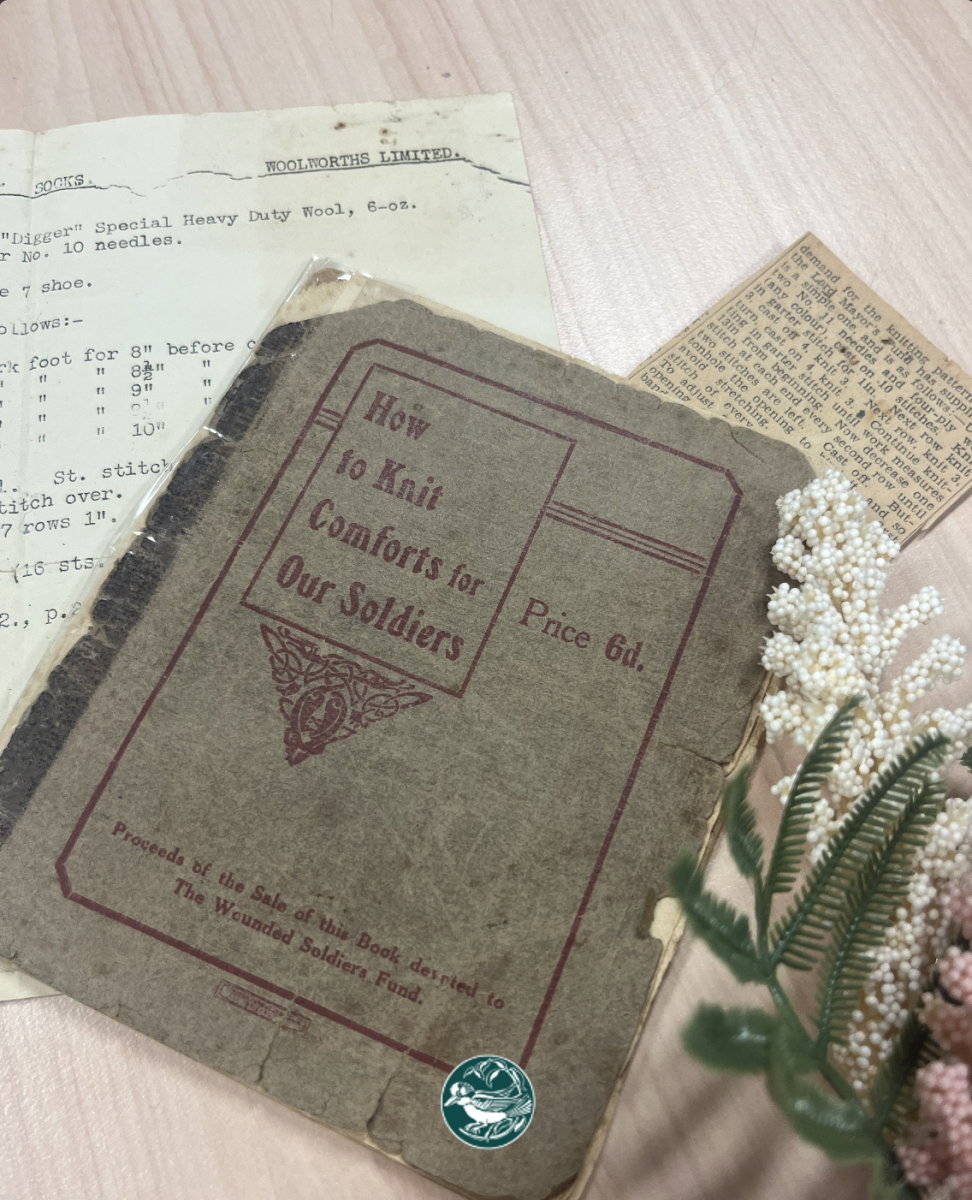
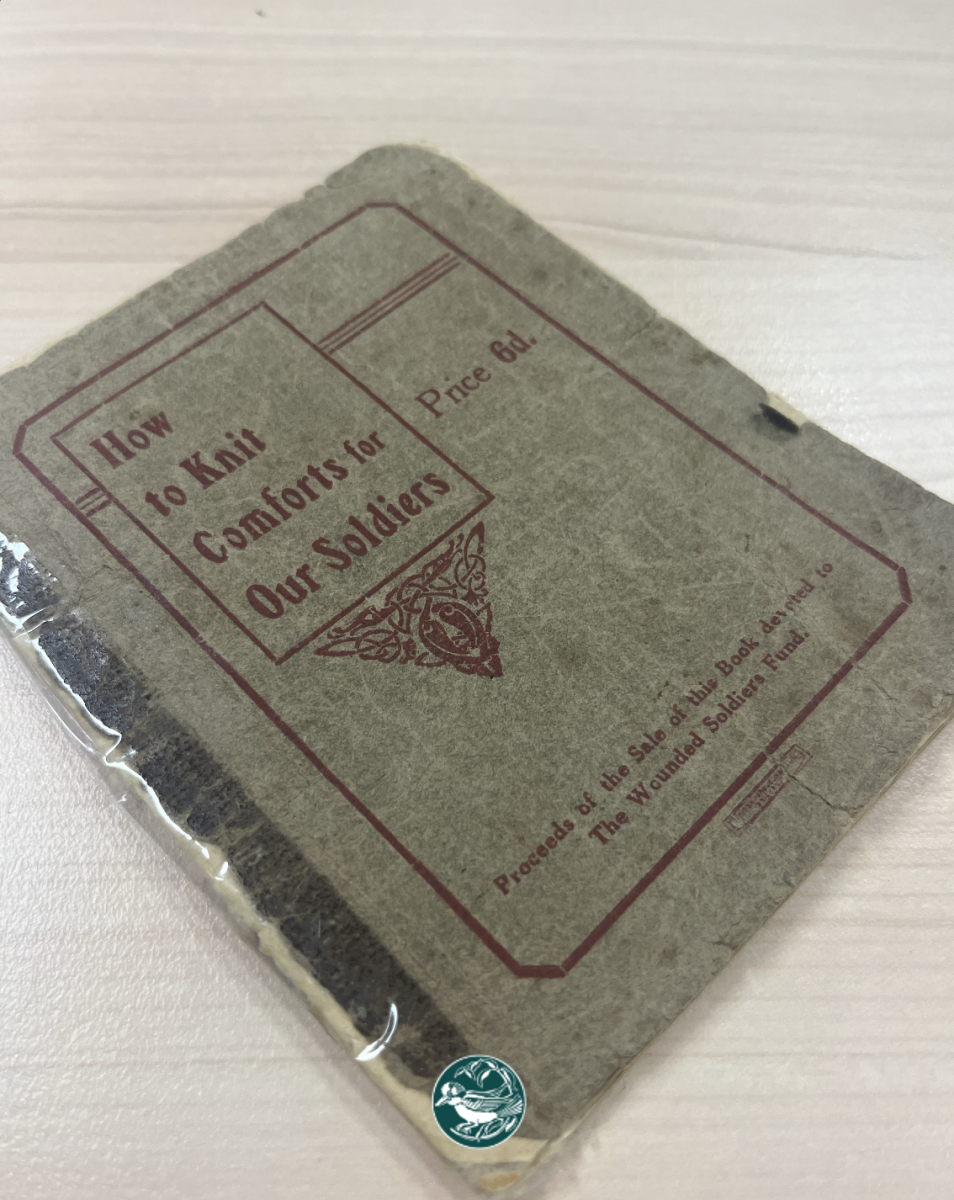
Smaller than a postcard and worn soft at the corners, the cover printed in red: How to Knit Comforts for Our Soldiers. This small booklet, decades old, was sent to us by a member of our community, Jan, with a note explaining why. “I value and greatly respect, admire and appreciate your dedication to the work you are doing to preserve the history and lifestyle of Australian men and women.” Jan understood that these stories only survive if someone chooses to keep them and share them.
Knitting as a national effort
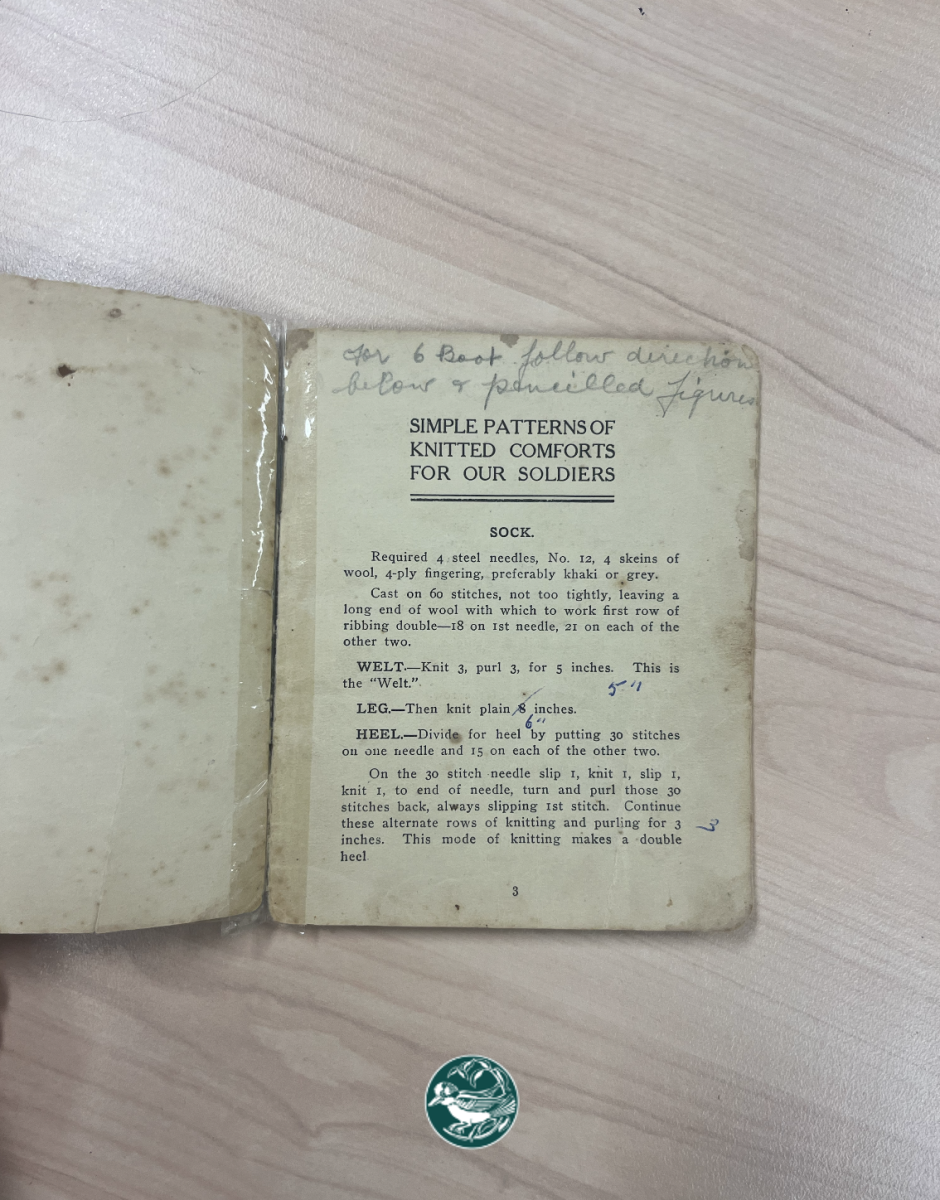
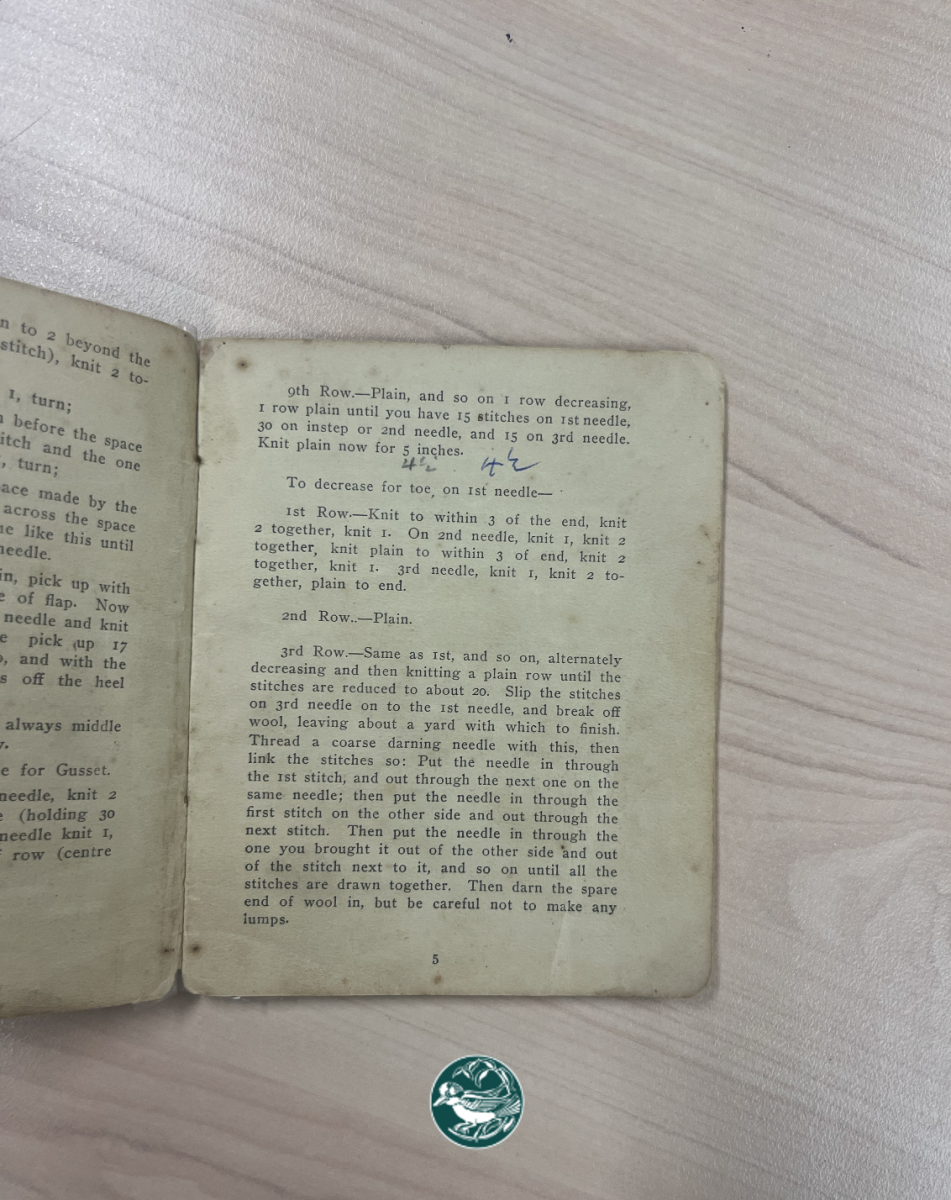
The booklet dates from a time when knitting for soldiers became a national effort, taken up in homes, halls, workplaces, and classrooms across the country. Inside is a set of patterns, page after page of instructions for the garments soldiers needed most. Wool and needles travelled everywhere: on trams, in waiting rooms, at kitchen tables after dinner. For many families it was the one practical thing they could still do for someone a long way from home. Through the Australian Red Cross Society and the Australian Comforts Fund, Australian volunteers knitted and sent more than 1.3 million pairs of socks overseas during World War One, alongside balaclavas, mittens, vests, and mufflers. In NSW, schoolchildren knitted around 54,000 pairs in 1915 alone.
A booklet that tell the story
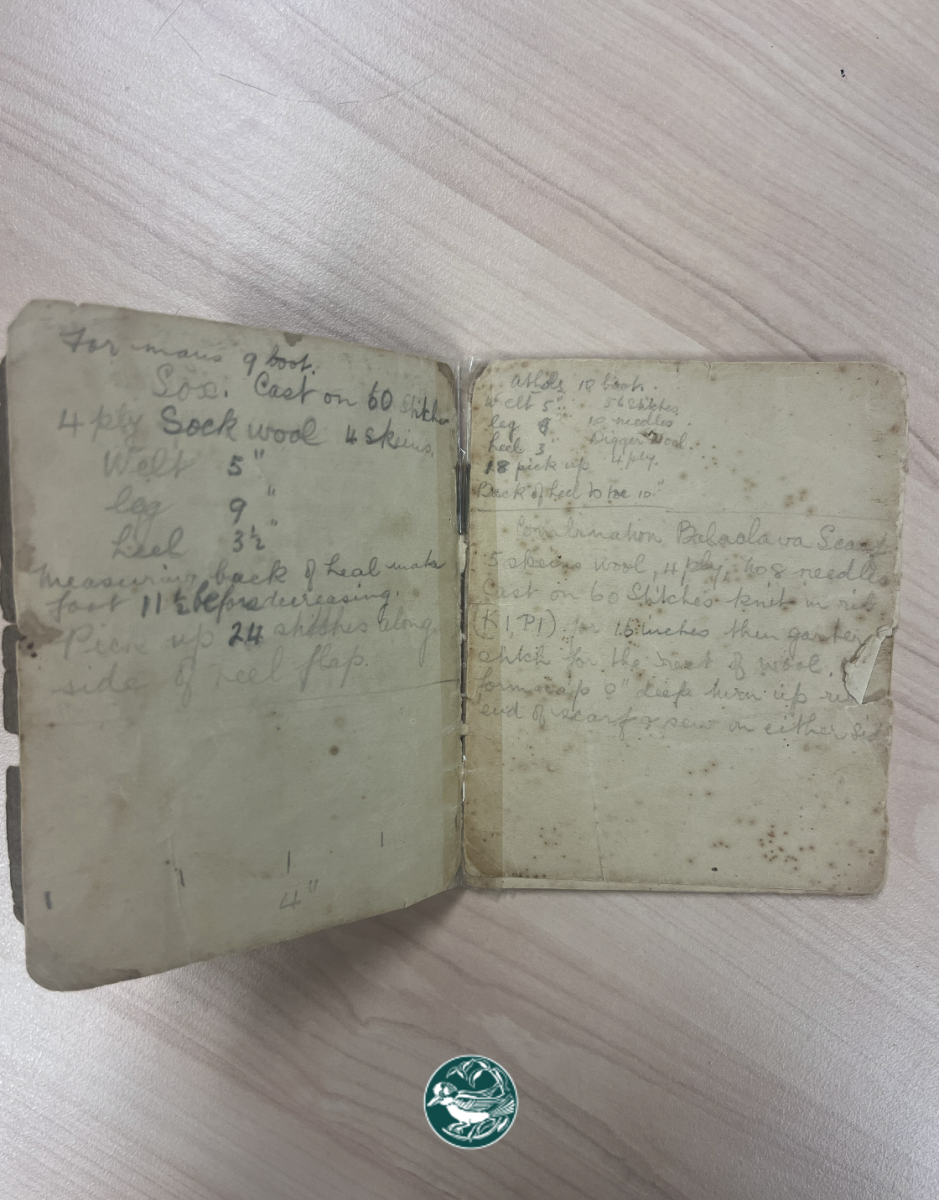
Open the booklet and you can see how much it was used. Notes in pencil, measurements written in the margins, the writing small and faded now. It belonged to Eunice, the elder of two sisters, and Jan understands those faded numbers are the shoe and foot size of Eunice’s brother Arthur. The markings are part of the object’s history: evidence of someone sitting down with the booklet in hand, working out how to make something that would fit, comfort, and last for a loved one far from home. Printed on the cover is a price of sixpence. What it holds is harder to price: the hours of women and children across the country, Eunice’s among them, and the care of the people who kept it safe so the rest of us could see it.
That is the thing about the objects we keep. They are rarely grand; ordinary belongings become extraordinary because of the memories and stories attached to them.
An object survives longer than the story attached to it. A booklet, a medal, a photograph can sit safely in a drawer for decades while the details around it thin out – who owned it, why they kept it, what it meant to them at the time. What holds a story in place is someone telling it and sharing it with others. Jan chose to pass the booklet on along with a note about what she knew of it and why she shared it with us.
Does this stir a memory for you? Perhaps there is a similar book or object in your own home; maybe it makes you wonder what sits in your own cupboards and drawers; it could be the object your children or friends already know the story of, or the one you have never told anyone about.
Share your story with us
This year marks 80 years since Jessie Vasey CBE OBE founded the Guild. 80 years of history, and we would like to gather the stories of war widows, their families and of inanimate objects that find life in the memories they hold. The everyday things: the photograph in its frame, the tin on the top shelf, the object that carries a story you would like to pass on.
If you have an object and a story to go with it, please share the story with us. Give us a call on (02) 9267 6577 or email communications@fov.org.au. You do not have to send the piece to us. Just send us a photo, what it is, and what it means to you. It is a chance to pass on a story that only you can tell. A chance for 80 years of stories to keep being told.