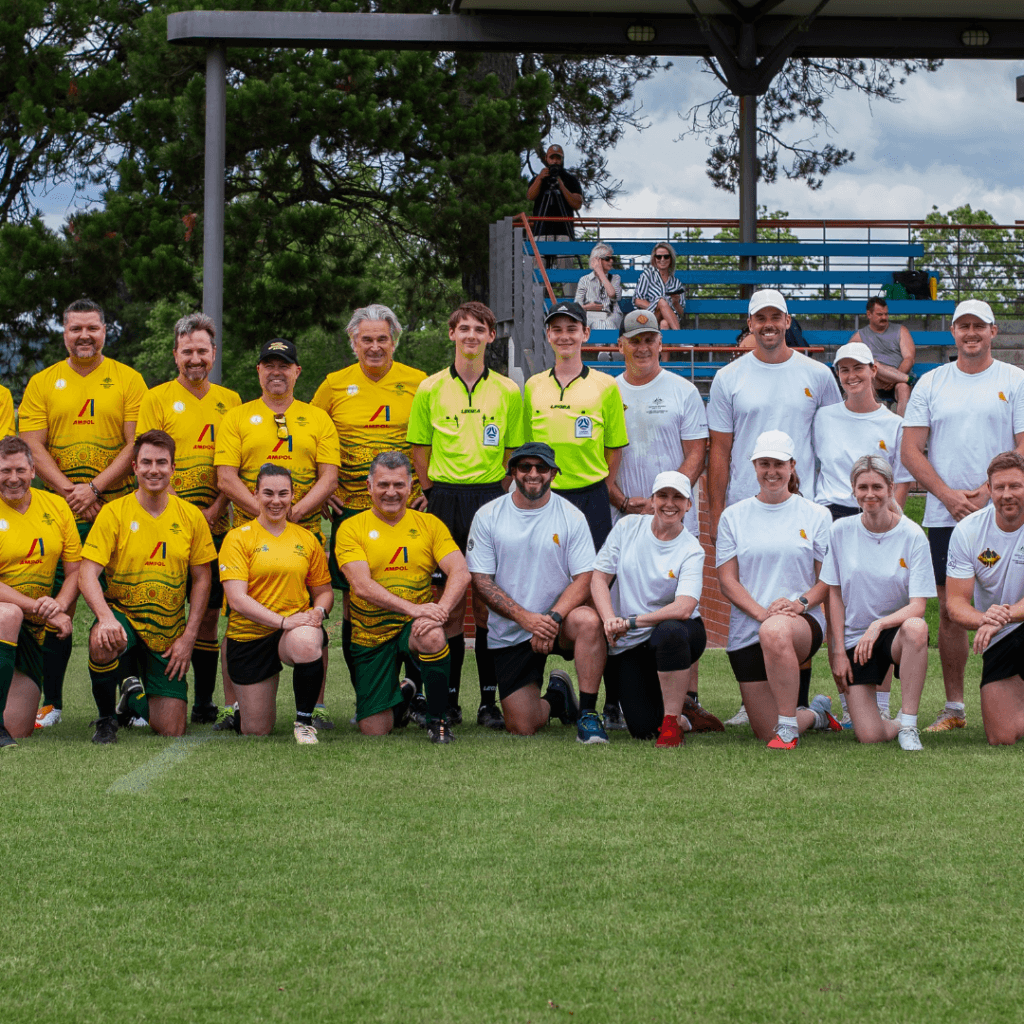

On 10 November 2026, the day before Remembrance Day, we held our first Veteran Families Remembrance Lunch at the Australian War Memorial in Canberra. There, our Board Chair, Tricia Hobson, announced that the Families of Veterans Guild will stand up, nationally, for Australia’s war widows and veteran families.
A national setting for our community’s story
Supported by Centuria, the lunch put our community’s story in a national setting, in front of people whose decisions and support affect veteran families. We wanted them to hear directly from war widows and families, and to include them in the decisions they shape.
War widow and RAAF veteran Shirley McLaren OAM led the Ode of Remembrance. The Chief of Army, Lieutenant General Susan Coyle AM CSC DSM, who served on our Board from 2021 to 2024, gave the keynote address. In our film, Voices of Families, a widow, a mother, and the spouse of a veteran shared what service has meant for their families.

Our announcement: a national voice for war widows and veteran families
On 1 July 2026, following the closure of our national body, Australian War Widows Incorporated, our Board resolved to take on the responsibility for making sure the voice of war widows is not lost around the advocacy table, and that war widows continue to be represented at a national level. Jessie Vasey and the widows of the Second World War fought hard to build that role, and we will not let it be left behind.
For war widows, this means protecting the entitlements, recognition, and legacy they are owed. For veteran families more broadly, it means their own pathways to support.

Carrying 80 years of advocacy forward
In 1945, seven months after her husband was killed in service, Jessie Vasey wrote a letter to more than 2,000 women who, like her, were facing a life they had never imagined. Her vision was simple: come together, support one another, learn to look after ourselves, and stand up for those of us who need it.
Together, these women created the War Widows Guild and built associations all around the country to, in their own words, “press their own case for dignity, fair treatment and recognition.” They turned their hardship and grief into a legacy, a movement that continues 80 years later.
These women never asked for charity or sympathy. They only ever asked for what was right and what was promised, something our organisation continues to ask for today.
They refused to accept the system as it existed for them, so they changed it. Today, our widows are part of the veteran system, and our job is to protect their place.

The families the system continues to leave behind
Our job is also to advocate for those who deserve a place in the system but continue to be left behind: the families of our veterans.
Within Australia’s veteran community, there are two populations that need support: veterans, and the families who stand beside them. While the system supporting veterans is well established, the system supporting their families is not well formed at all.
The advocacy of our founders established an enduring principle: the families of those who serve are not simply an extension of the veteran. They have needs, experiences, and contributions of their own, and they deserve to be seen and supported in their own right.
We estimate there are at least 800,000 people in Australia who are the families of our veterans, including their widows, spouses, partners, children, and parents. The Department of Veterans’ Affairs (DVA) currently only knows the family members with an entitlement: dependent widows and dependent children, around 70,000 people. That means more than 90% of veteran families in Australia remain largely invisible.
The impact of service does not end when someone leaves the Defence Force. Families carry it for years, and for many, through loss. Our 2025 Veteran Families Survey found that:
- More than half of war widows struggle to access the healthcare they need
- 52% of veteran families had experienced mental health challenges
- A third had difficulty accessing mental health care
- Only 36% agreed that services were tailored to veteran families
- In 70% of households, children had experienced a personal or emotional challenge
What we have achieved, and what comes next
We have already had some wins this year. The most significant, achieved alongside others in our sector and politicians, was scrapping the proposed cap on allied health care treatment. Fees to providers will increase, and access for Gold Card holders, including war widows and children, remains unlimited. It followed months of sustained advocacy and pressure from our organisation and many others, and it was an advocacy win for our whole sector.
Now it is time to look at other limits on treatment and entitlements affecting widows, children, and families. On Friday 30 October, our CEO, Renee Wilson, gave evidence to a Senate inquiry into DVA treatment limitations. The inquiry aimed to understand how the government was making its policy decisions on treatment, and we used it to put three other major issues on the table:
- The two-year time limit on support available to widowed partners under the Acute Support Package
- The removal of treatment cards for children of deceased veterans based on their education enrolment, not their needs
- Limiting mental health support for the families of veterans to counselling only
At the heart of all three is one simple principle: support should be based on need, not an arbitrary deadline, birthday, or administrative rule. At the end of her evidence, Renee summed up our ask to the committee:
“We are asking for the rhetoric to match the practical realities of our daily lives.” – Renee Wilson, CEO
Our submission and the hearing transcript are available at aph.gov.au.
Our advocacy in NSW
We have also continued working at the NSW state level:
- Advocating for full council rate concessions to be extended to all NSW widows with a Gold Card
- Making sure families are recognised and included in the NSW Government’s new memorial to veterans and their families
- Joining RSL NSW and Legacy Club Services to call for greater protection of NSW Defence sites, including Victoria Barracks Sydney
Share your experience
Thank you to everyone who continues to share their lived experience and the issues they face. It has helped us build advocacy positions that achieve results. Your experiences and ideas are welcome at any time. Please write to us or email guildadvocacy@fov.org.au.
Our sincere thanks to Centuria for supporting the lunch, and to the Australian War Memorial for welcoming us. See how our community marked Remembrance Day the next morning in Remembrance Day 2026 commemorations.